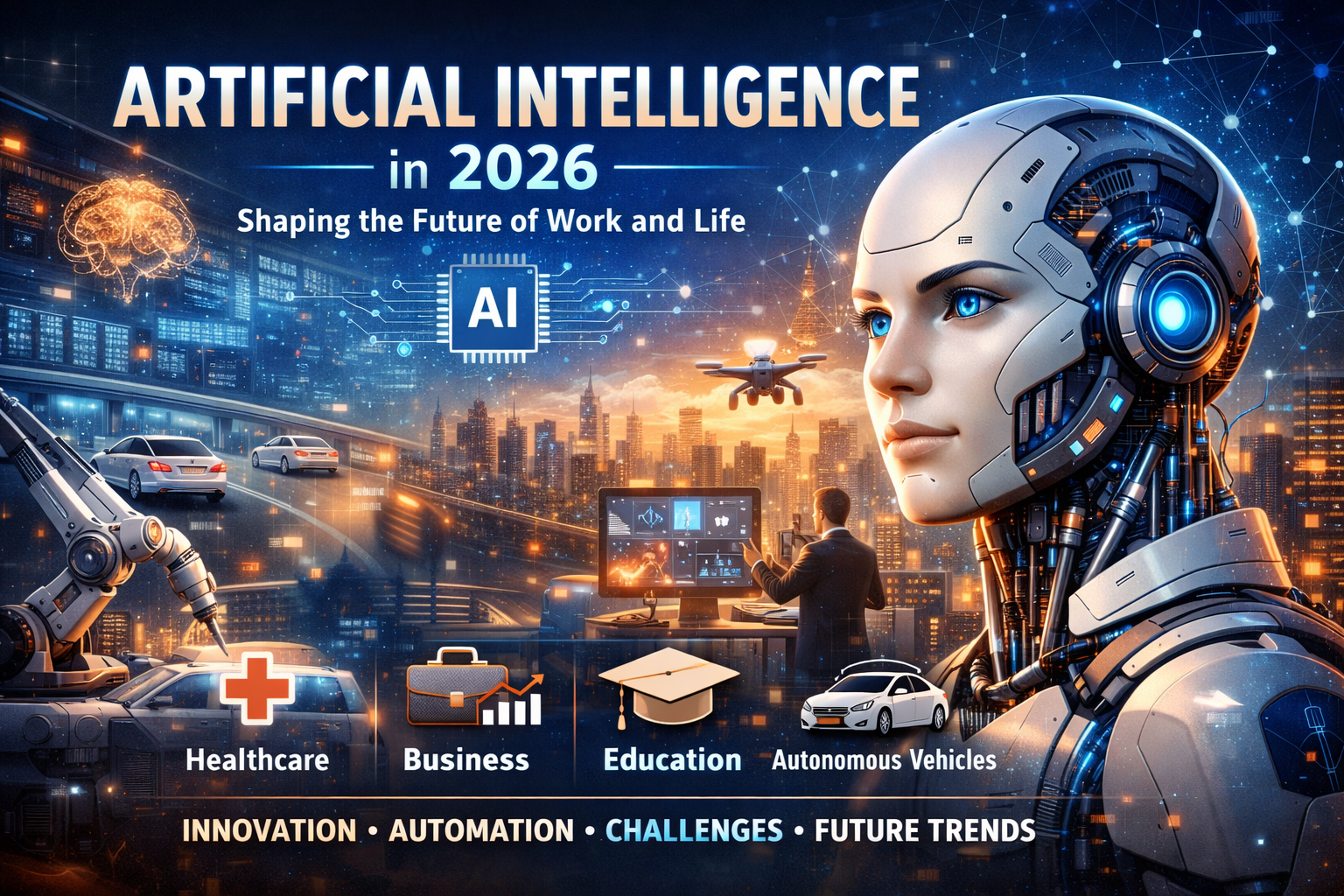
Artificial Intelligence (AI): How It Is Transforming Our Future in 2026
Artificial Intelligence (AI) is no longer a futuristic concept seen only in science fiction movies. In 2026, AI is actively shaping the way we work, communicate, learn, and live. From chatbots that answer customer queries to self-driving cars and smart assistants, AI has become an essential part of modern life.
In this blog post, we will explore what AI is, how it works, its real-world applications, benefits, challenges, and what the future holds.
What is Artificial Intelligence?
Artificial Intelligence refers to the simulation of human intelligence in machines. These machines are designed to think, learn, and make decisions like humans.
AI systems can:
-
Analyze large amounts of data
-
Recognize patterns
-
Understand language
-
Solve problems
-
Make predictions
AI combines technologies like Machine Learning (ML), Deep Learning, Natural Language Processing (NLP), and Computer Vision to function effectively.
How Does AI Work?
AI works by processing large datasets and using algorithms to learn from them. The more data AI systems receive, the more accurate they become.
There are three main types of AI:
1. Narrow AI
This AI performs specific tasks, like voice assistants or recommendation systems.
2. General AI
A more advanced AI that can perform any intellectual task a human can do (still under development).
3. Super AI
A hypothetical AI that surpasses human intelligence (theoretical stage).
Real-World Applications of AI
AI is already being used across various industries:
???? Healthcare
-
Disease prediction
-
AI-powered diagnostics
-
Robotic surgeries
???? Business
-
Chatbots for customer support
-
Predictive analytics
-
Fraud detection
???? Education
-
Personalized learning systems
-
Automated grading
-
Virtual tutors
???? Transportation
-
Self-driving vehicles
-
Traffic management systems
???? Daily Life
-
Smart assistants like Alexa or Google Assistant
-
Personalized content recommendations
Benefits of Artificial Intelligence
AI offers several advantages:
✔ Increased efficiency and productivity
✔ Reduced human errors
✔ 24/7 availability
✔ Faster decision-making
✔ Cost savings for businesses
AI helps companies automate repetitive tasks, allowing employees to focus on strategic and creative work.
Challenges and Risks of AI
Despite its advantages, AI also presents challenges:
⚠ Job displacement due to automation
⚠ Data privacy concerns
⚠ Ethical issues
⚠ AI bias and discrimination
⚠ Security threats
Responsible AI development and regulations are essential to ensure safe and fair usage.
The Future of AI
The future of AI looks promising. Experts predict that AI will:
-
Improve healthcare diagnostics
-
Enhance smart cities
-
Revolutionize education systems
-
Power advanced robotics
-
Drive fully autonomous vehicles
As AI continues to evolve, human-AI collaboration will become more common rather than full replacement.
Conclusion
Artificial Intelligence is not just a technological trend; it is a transformative force reshaping industries and daily life. While it offers remarkable benefits, it also requires careful regulation and ethical consideration.
The key to a successful AI-driven future lies in responsible innovation, continuous learning, and adapting to change.
AI is here — and it is only getting smarter.

About Admin User
Author and tech enthusiast at Prepbay Software Solutions. Passionate about web development and cloud computing.
Comments (0)
No comments yet. Be the first to comment!
Leave a Comment